AstroMum · Scientific Thinking for Meaningful Learning

Non-Local Development Balance

A human-centered framework for observing learning in complex developmental systems (Nieva, 2026, in prep.).

Understanding development under partial visibility

The Non-Local Development Balance Framework addresses a central challenge in education: what is visible in classrooms is often only a small part of a child’s developmental reality.

Grades, participation, quiet behavior or apparent success can function as local signals. Yet these signals may emerge from distributed developmental conditions: emotional regulation, family contexts, cognitive load, adaptive effort, prior experiences, and longitudinal trajectories that are not immediately visible.

The framework proposes a complexity-aware and human-centered approach to educational observation. It does not replace teaching quality, professional judgment or diagnostics. It expands the interpretative lens through which development is understood over time.

The conceptual bridge

Astrophysical observation reveals the epistemological limits of interpreting local signals within complex distributed systems.

Astrophysics

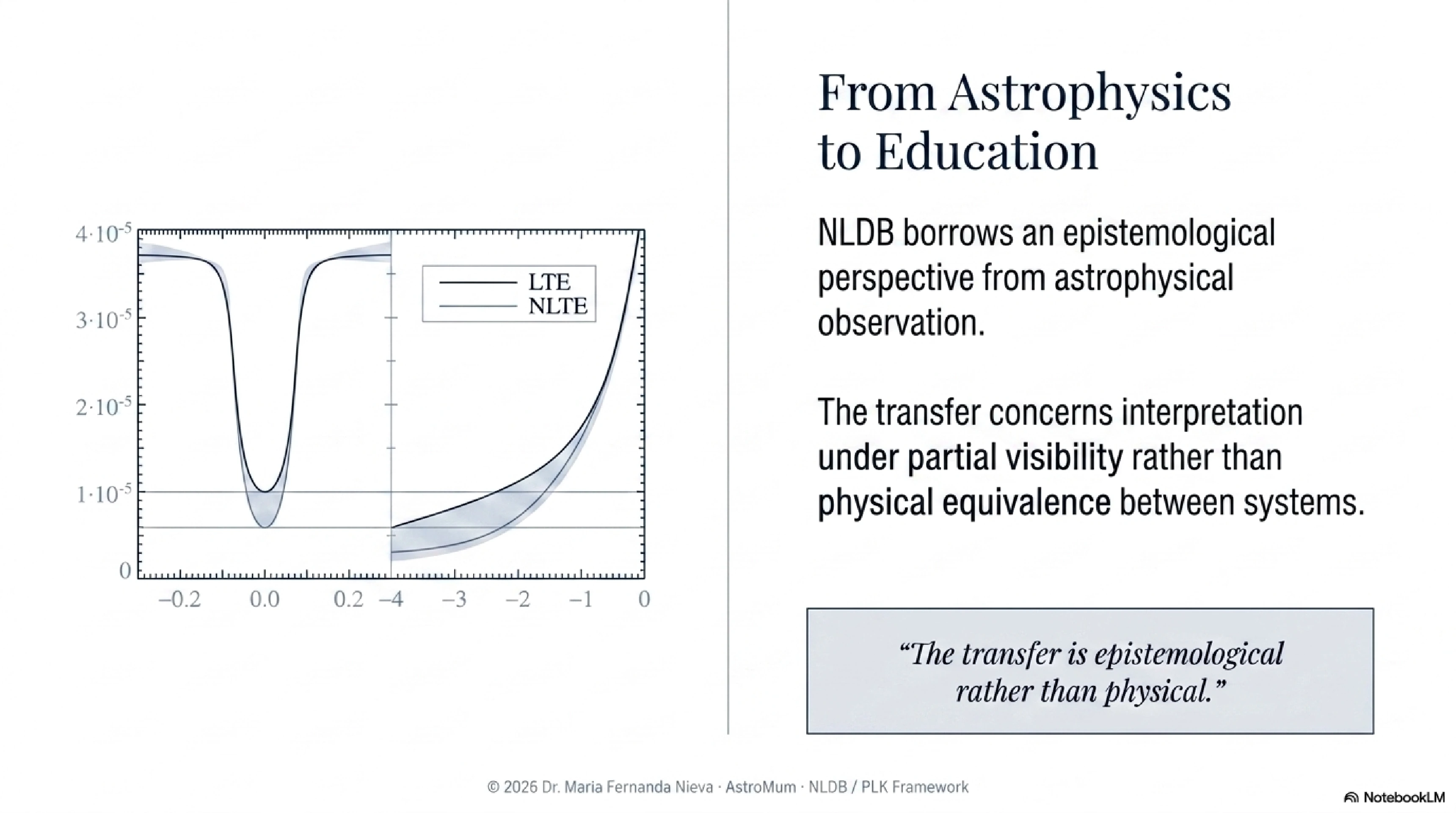
In Non-LTE, an observable spectral signal may be shaped by local and non-local influences, revealing that local appearances do not always explain the full system.

Education

In education, observable performance or behavior may emerge from distributed developmental conditions that remain partially invisible to the observer.

Framework

NLDB / PLK invites interpretative humility, multidimensional observation and longitudinal understanding before drawing conclusions from visible outcomes.
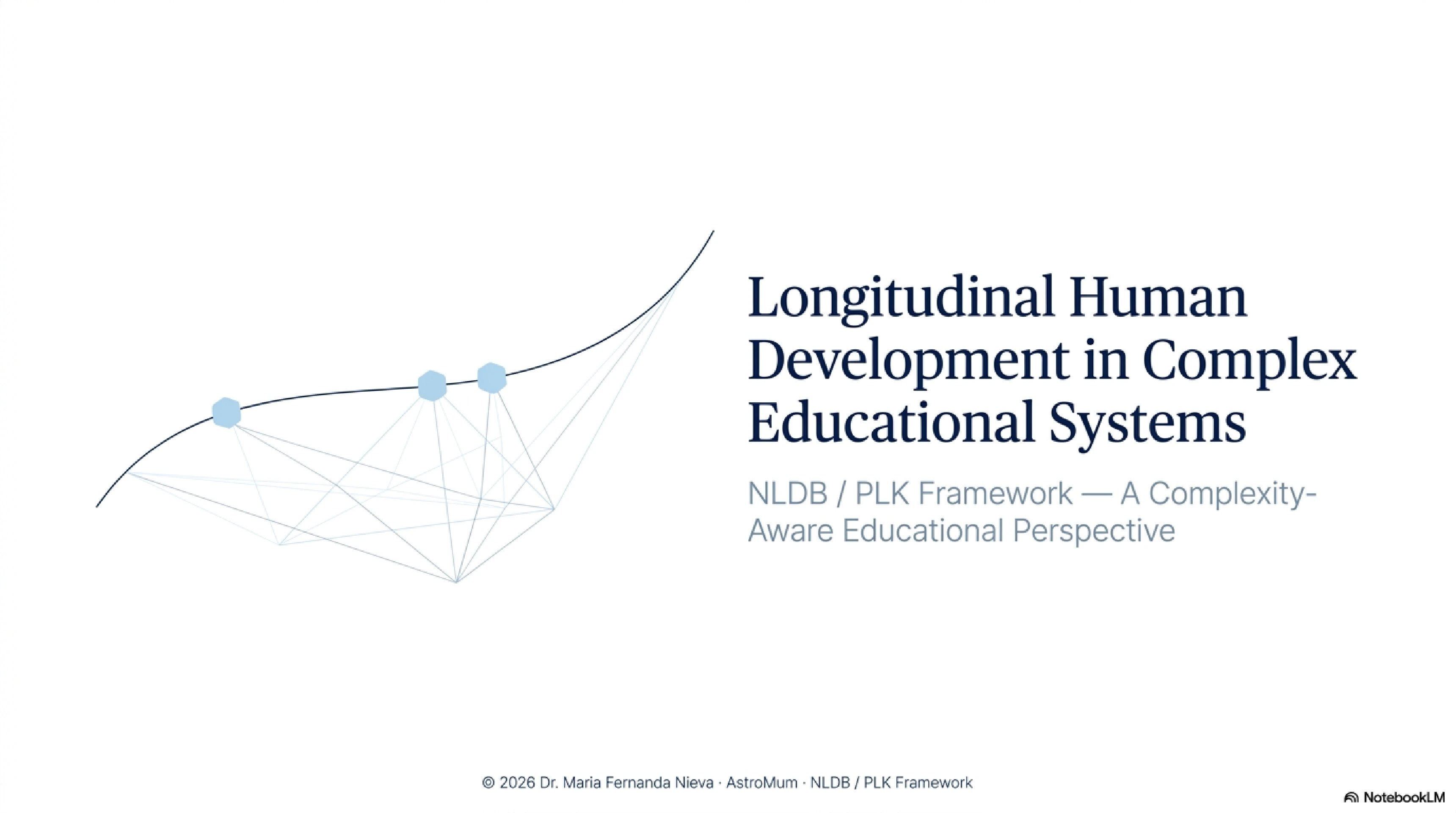
Longitudinal Human Development in Complex Educational SystemsSlide 01
Slide 1: Longitudinal Human Development in Complex Educational Systems
Framework title slide introducing NLDB / PLK as a complexity-aware educational perspective.
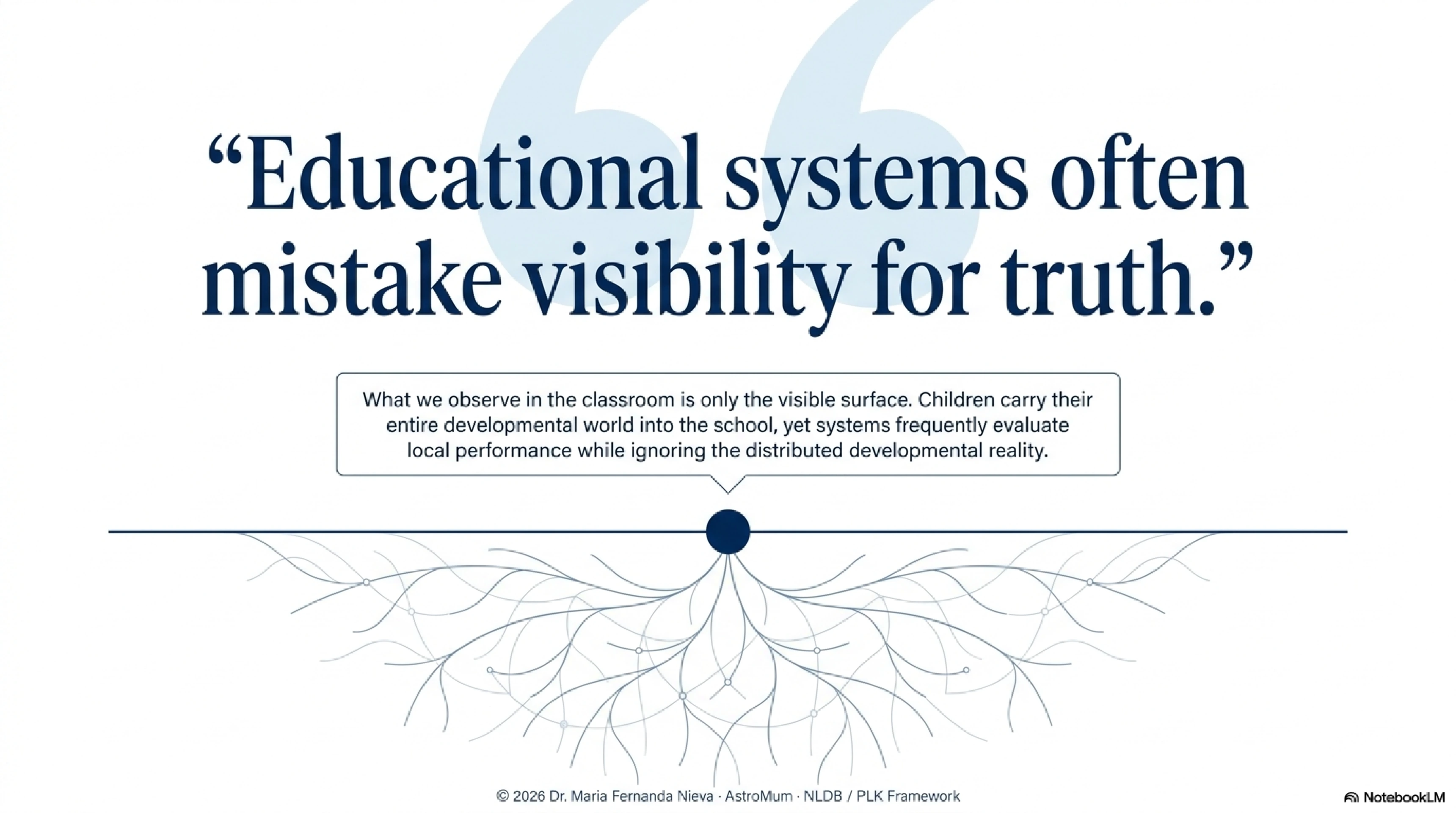
Educational systems often mistake visibility for truthSlide 02
Slide 2: Educational systems often mistake visibility for truth
A central statement of the framework: classroom visibility is only the surface of distributed developmental reality.
From Astrophysics to EducationSlide 03
Slide 3: From Astrophysics to Education
The epistemological transfer from Non-LTE to NLDB: local signals, distributed influences and interpretation under partial visibility.
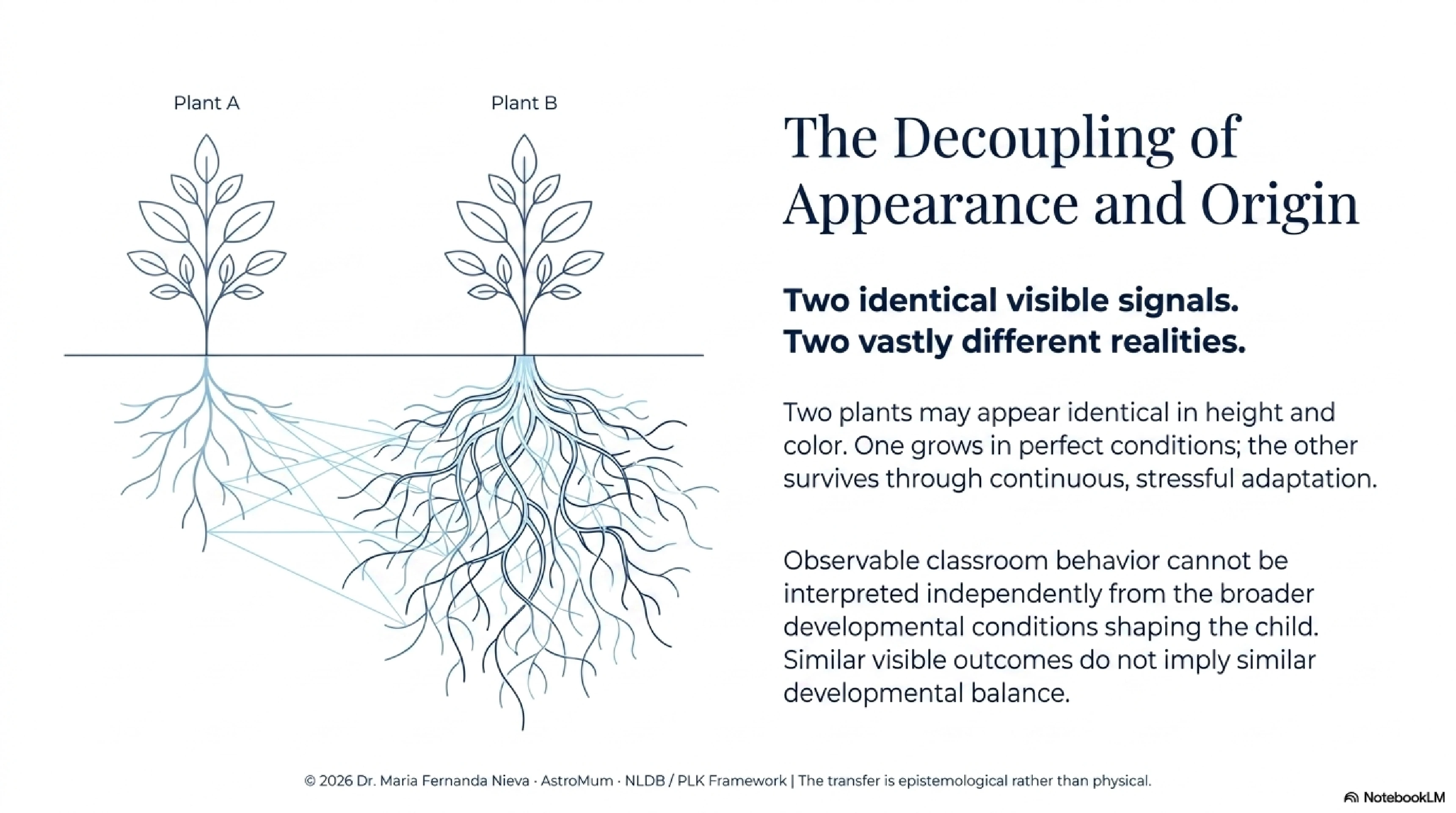
The Decoupling of Appearance and OriginSlide 04
Slide 4: The Decoupling of Appearance and Origin
Two similar visible signals can emerge from very different developmental ecosystems.
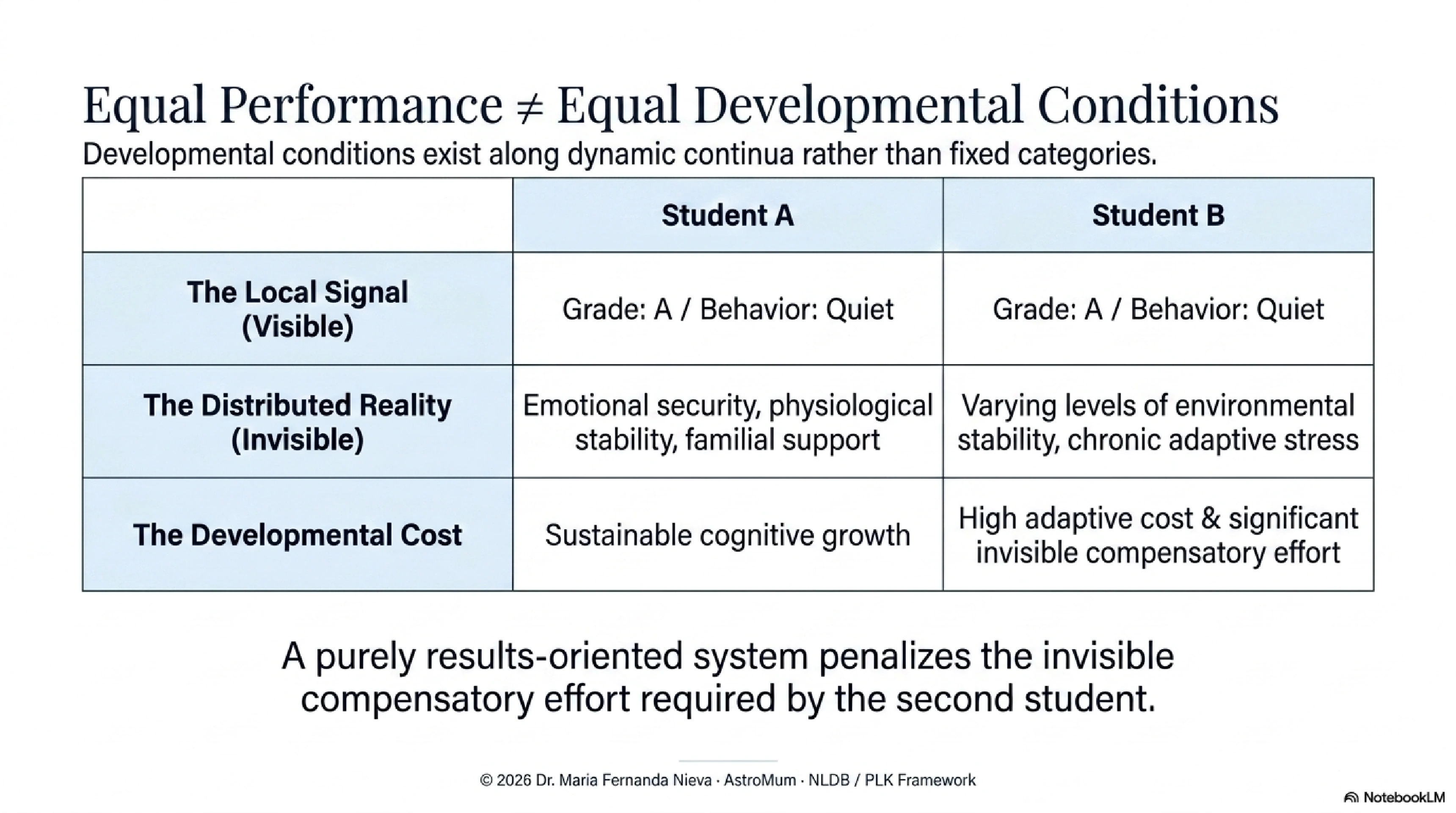
Equal Performance ≠ Equal Developmental ConditionsSlide 05
Slide 5: Equal Performance ≠ Equal Developmental Conditions
A comparative table showing how identical visible outcomes may conceal different distributed developmental realities.
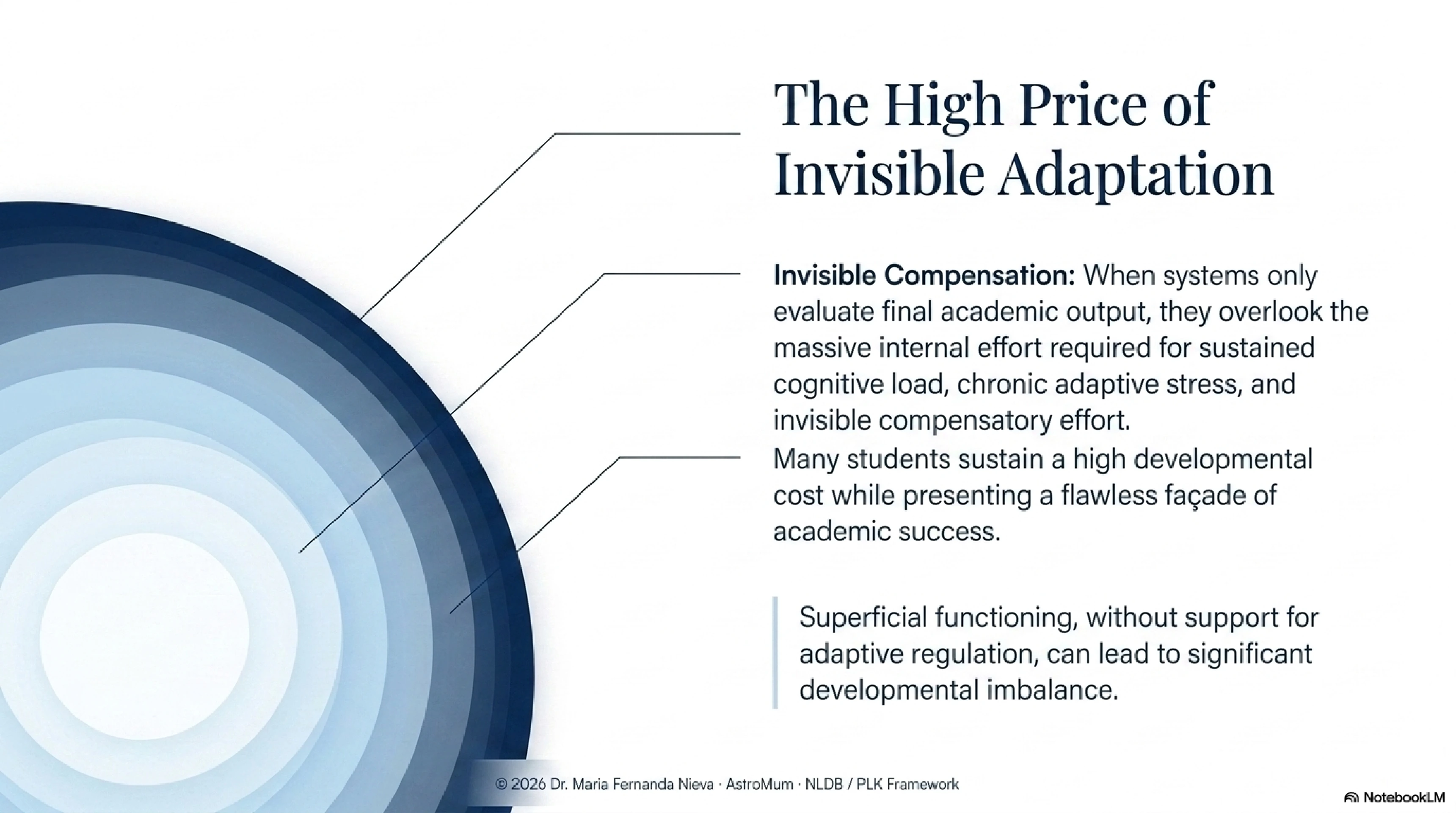
The High Price of Invisible AdaptationSlide 06
Slide 6: The High Price of Invisible Adaptation
Invisible compensatory effort and adaptive load as overlooked dimensions of educational performance.
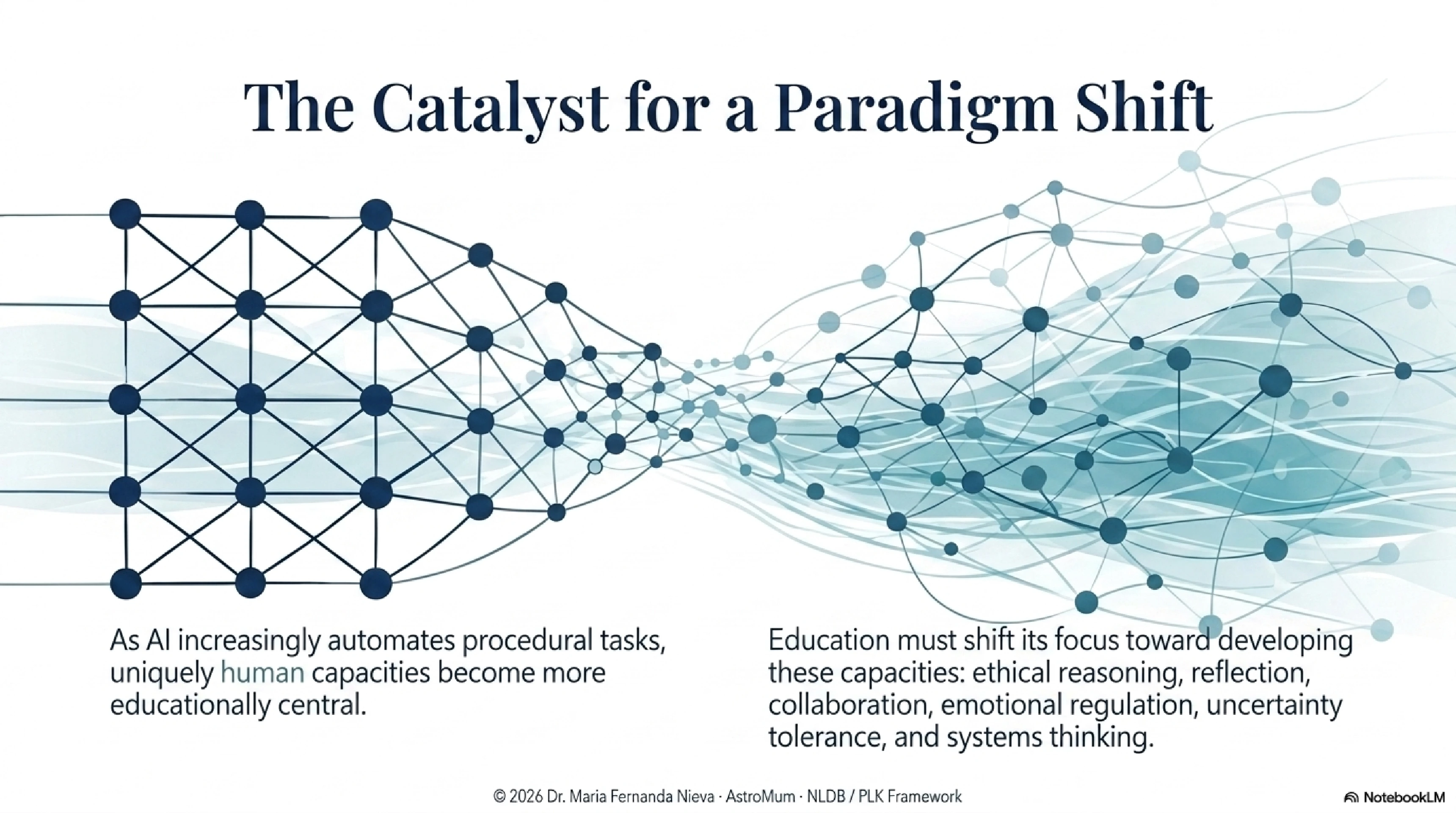
The Catalyst for a Paradigm ShiftSlide 07
Slide 7: The Catalyst for a Paradigm Shift
AI-shaped societies increase the need for distinctly human capacities: reflection, cooperation, uncertainty tolerance and systems thinking.
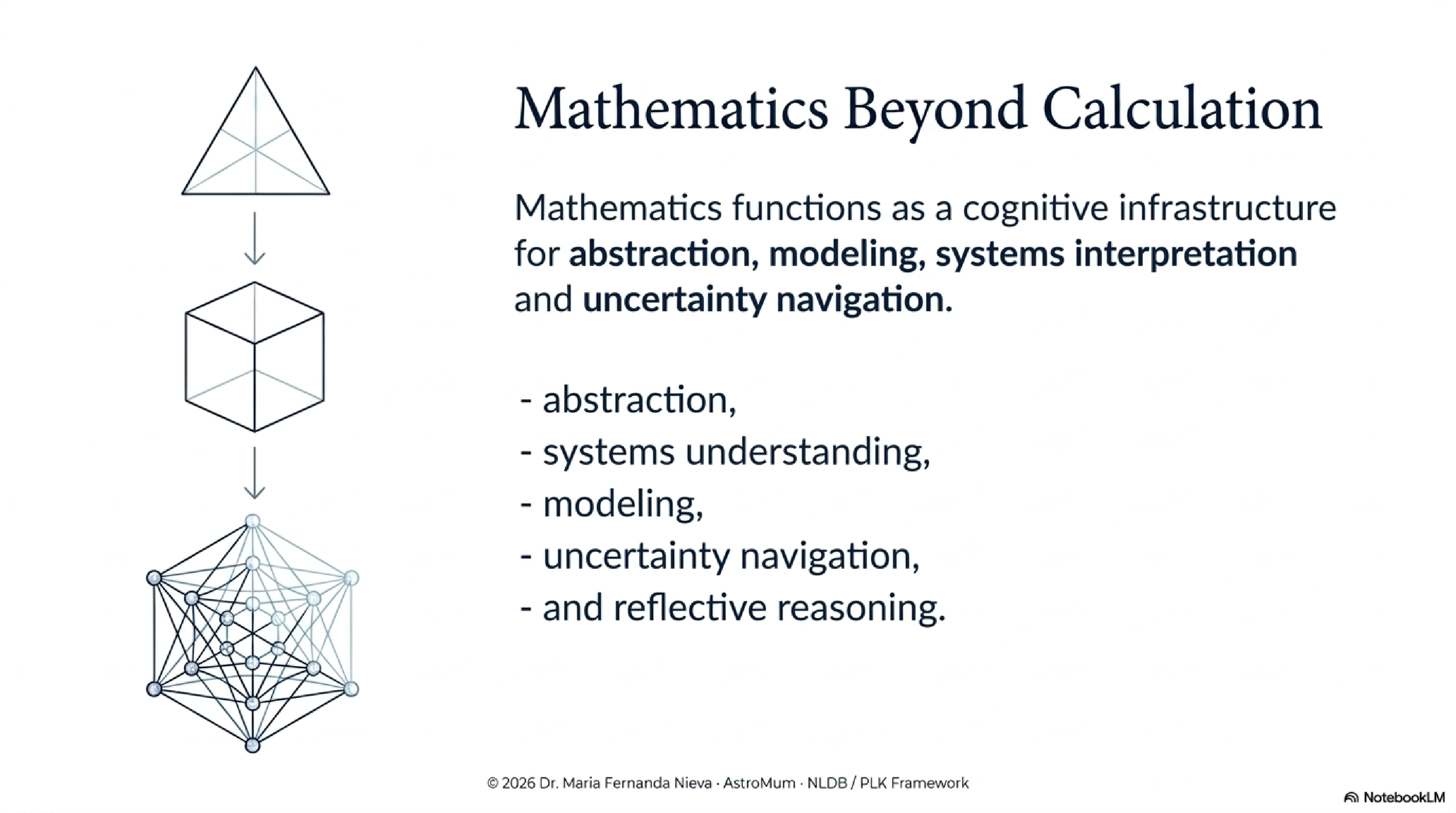
Mathematics Beyond CalculationSlide 08
Slide 8: Mathematics Beyond Calculation
Mathematics as cognitive infrastructure for abstraction, modeling, systems interpretation and uncertainty navigation.
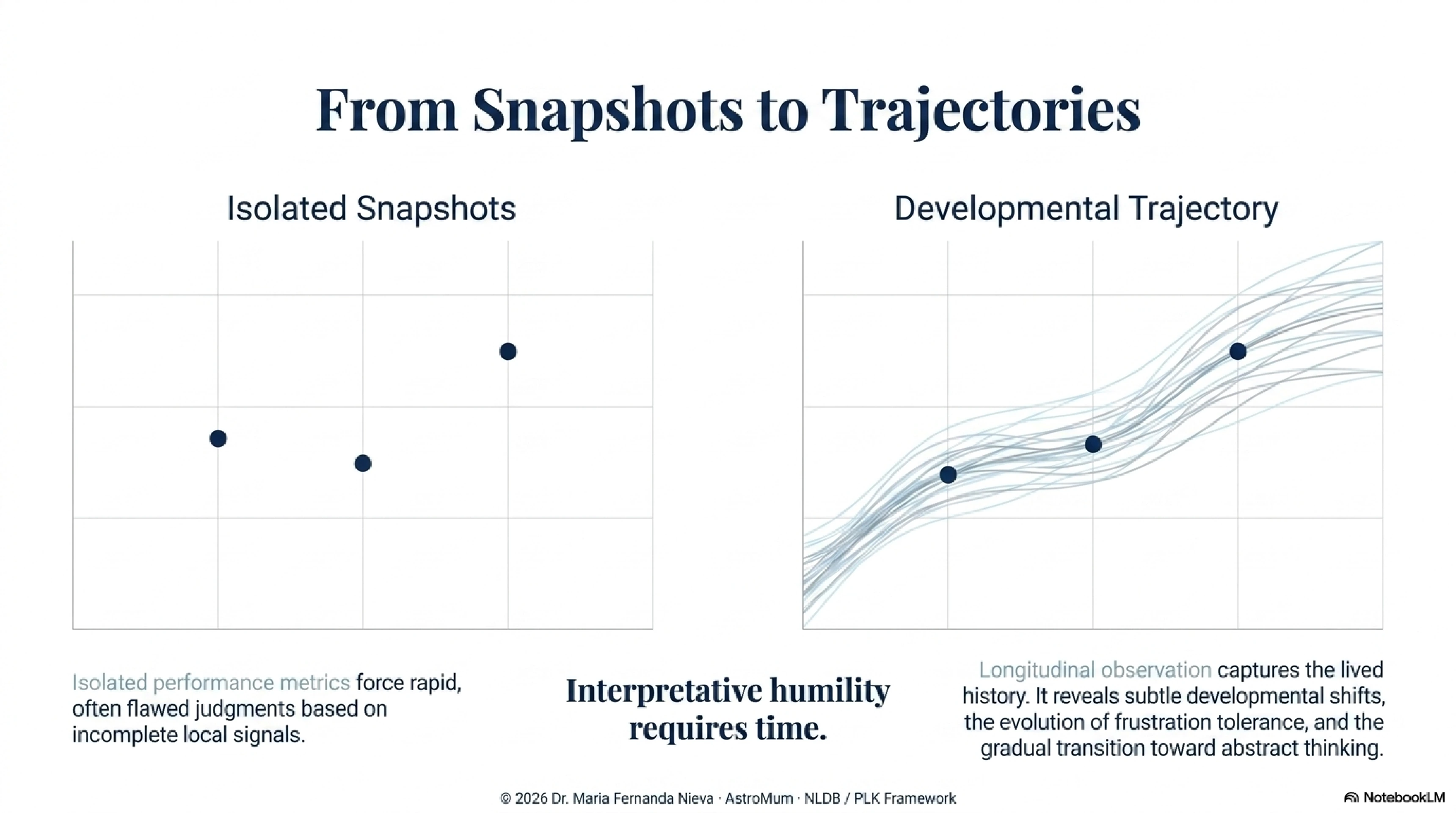
From Snapshots to TrajectoriesSlide 09
Slide 9: From Snapshots to Trajectories
Longitudinal observation reveals patterns that isolated snapshots cannot capture.
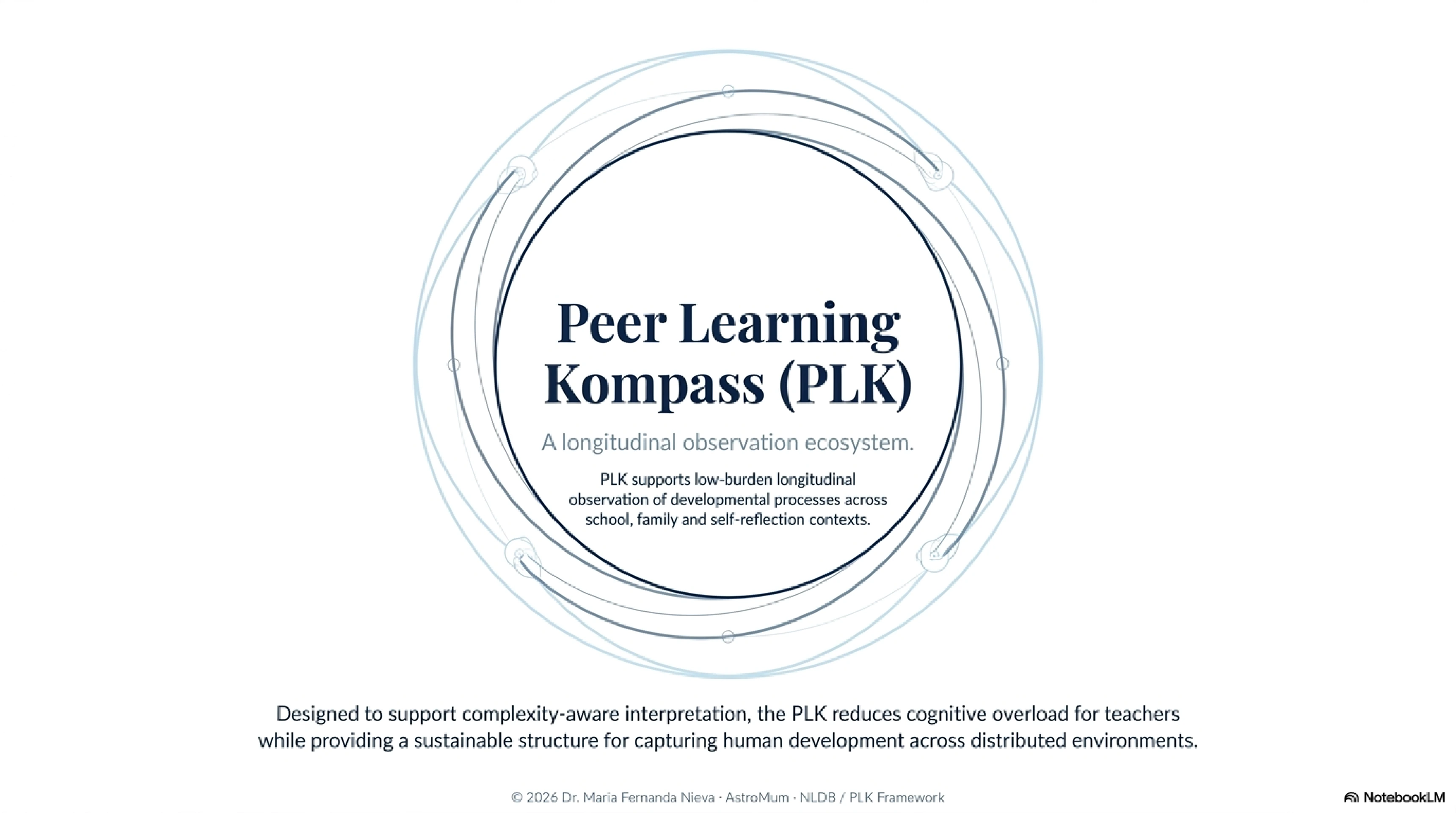
Peer Learning Kompass (PLK)Slide 10
Slide 10: Peer Learning Kompass (PLK)
PLK as a longitudinal observation ecosystem for low-burden developmental documentation across school, family and self-reflection contexts.
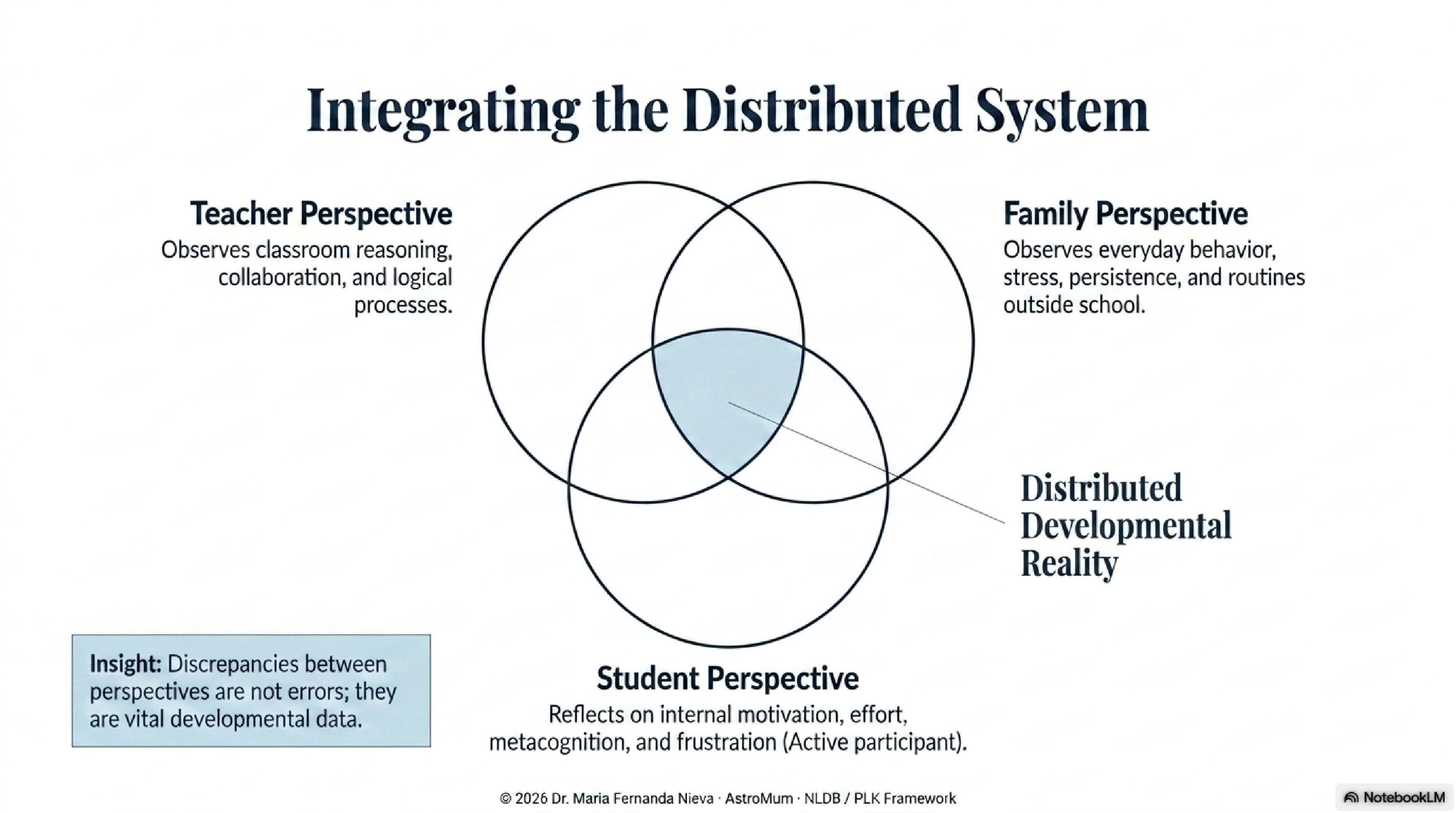
Integrating the Distributed SystemSlide 11
Slide 11: Integrating the Distributed System
Teacher, student and family perspectives together reveal a richer distributed developmental reality.
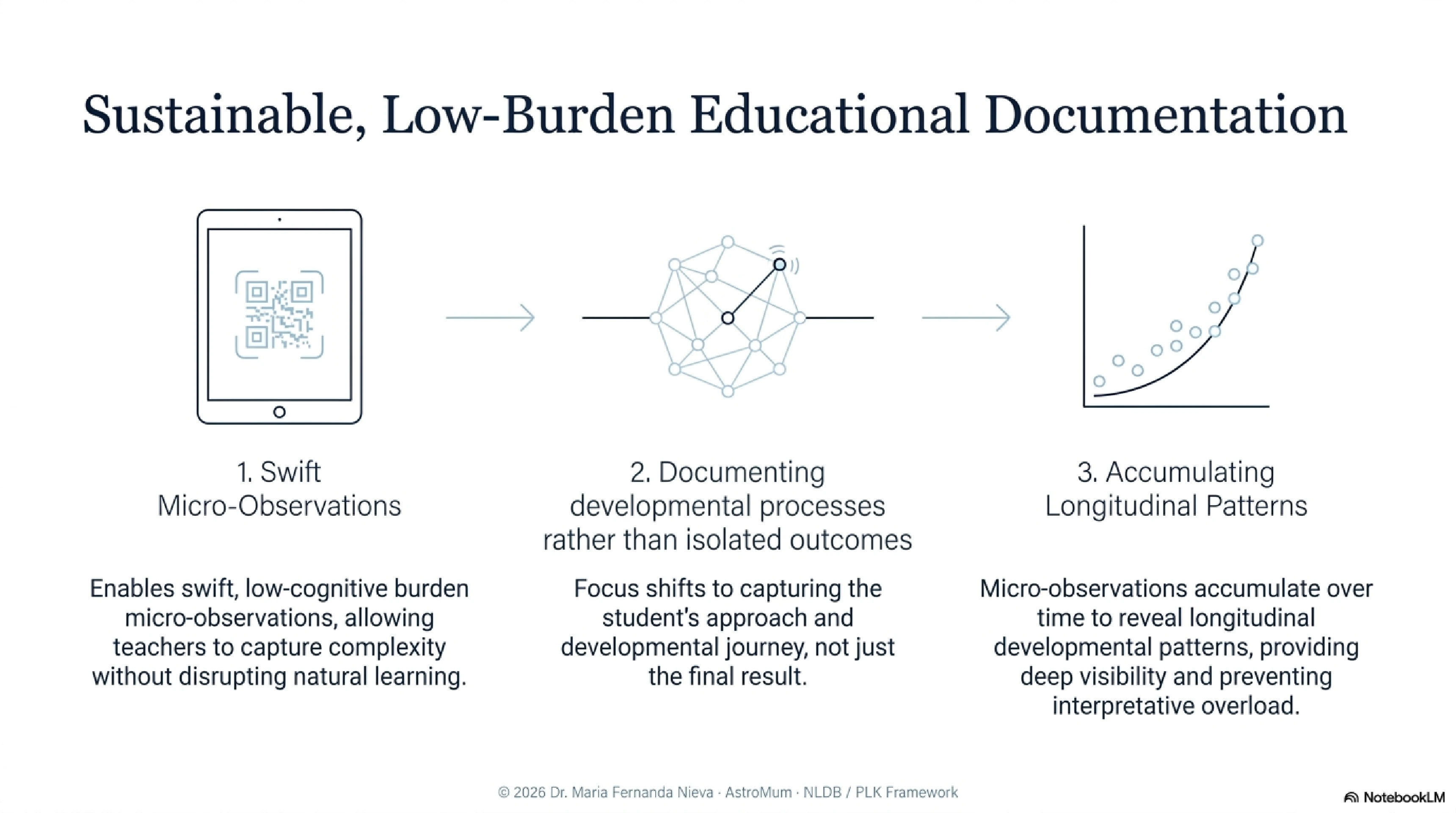
Sustainable, Low-Burden Educational DocumentationSlide 12
Slide 12: Sustainable, Low-Burden Educational Documentation
Micro-observations accumulate into meaningful longitudinal patterns without overloading teachers.
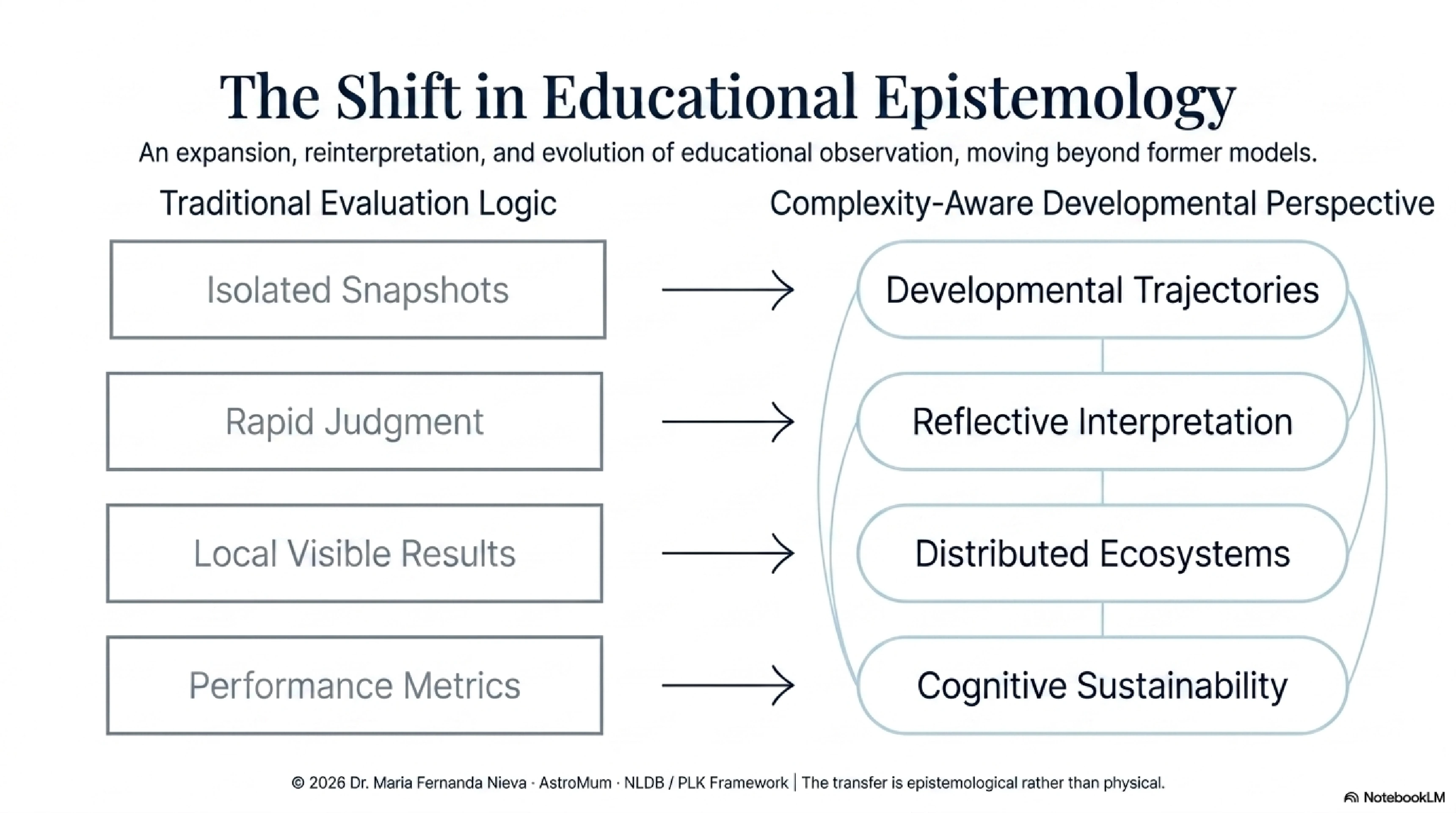
The Shift in Educational EpistemologySlide 13
Slide 13: The Shift in Educational Epistemology
An expansion from isolated snapshots and rapid judgment toward developmental trajectories, reflective interpretation and cognitive sustainability.
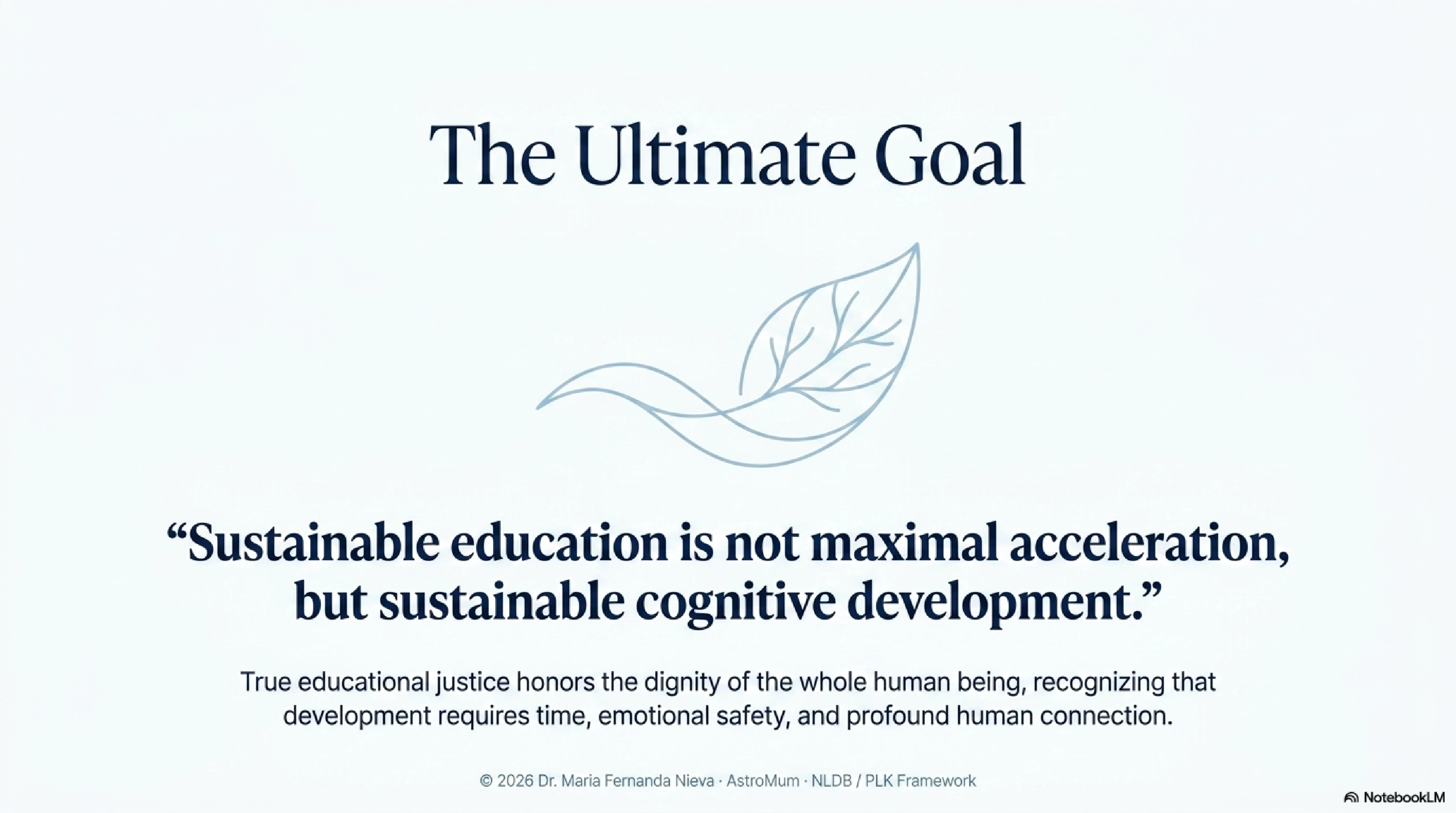
The Ultimate GoalSlide 14
Slide 14: The Ultimate Goal
Sustainable education as sustainable cognitive development, grounded in dignity, emotional safety and human connection.
AcknowledgementsSlide 15
Slide 15: Acknowledgements
Acknowledgements to family, schools, institutions, scientific and educational communities, students, lifelong learners and rehabilitation professionals.

Acknowledgements

A framework shaped through human relationships.

Family & Early Education

To my parents, grandparents and daughters, whose intergenerational presence continually shaped my understanding of learning, development and human relationships. With gratitude to Escuela y Liceo Vocacional Sarmiento for its experimental and university-linked educational tradition.

Scientific & Educational Communities

To scientific and educational communities, colleagues and institutions across multiple countries and research environments, whose collaboration and distributed perspectives shaped this framework across science, education and human development.

Schools & Institutions

To VS Igls-Vill, VS Innere Stadt, Pädagogische Hochschule Tirol and the PHT Team Mathematik for collaboration, trust, dialogue and the continuous exchange between practice and reflection.

Students & Lifelong Learners

To students and lifelong learners across diverse workshops and educational contexts - from early childhood to senior learners - whose curiosity, critique and lived experiences continually shaped this framework.

Human Care & Rehabilitation

To the interdisciplinary rehabilitation professionals whose work deepened my understanding of regulation, care and sustainable human development.

May education help children learn to think deeply, collaborate meaningfully, tolerate uncertainty, act responsibly, and remain profoundly human within increasingly complex worlds.

Institutional collaboration

For keynotes, workshops, educational innovation projects, school development, teacher education or institutional collaboration, please contact:

info@astromum.com